To find new music without an algorithm, follow people instead of playlists. Dig through the collections of fans who own the same records you do, follow labels and radio hosts whose taste you trust, read credits, and visit record shops. People make jumps an algorithm won't, and that's where the surprising records come from.
If your recommendations have started to sound the same, it's not your imagination. Streaming recommendations are built to keep you listening, and the safest way to do that is to play you something close to what you already played. Over time the edges get sanded off. You hear more of the middle of your taste and less of the weird stuff at the edges, which is usually where the best music is.
The fix isn't to quit streaming. It's to add a few sources of music that come from people, not predictions.
Why algorithmic picks start to sound the same
Most recommendation systems learn from two things: what you played and didn't skip, and what millions of other listeners played after the same song. Both pull toward the familiar. A track that lots of people finish gets recommended more, so it gets played more, so it gets recommended more again.
That's useful when you want background music. It's frustrating when you want to find the record nobody around you has heard yet, because by definition that record hasn't built up the listening history an algorithm needs.
What people do that algorithms don't
A real person's record collection is full of jumps. Someone who loves the same obscure jazz reissue as you might also own a Detroit techno 12", a field recording from Ghana and an album by their friend's band. No model would connect those. But if that person's taste overlaps with yours on the records you care most about, their jumps are worth following.
This is how people have always found music. Older siblings, record shop staff, DJs, radio hosts and the friend with the overflowing shelves. The internet just makes it possible to find those people outside your own town.
Seven ways to find music through people
1. Dig through other fans' collections
On Bandcamp, every album page shows the fans who bought it, and most fans keep their collections public. Click into the people who bought a record you love and look at what else they own. It's the closest thing online to flipping through a stranger's shelves. Our guide to finding music on Bandcamp walks through this method step by step.
2. Follow labels, not playlists
A good label is a person or a small team saying no to almost everything. When three records you love share a label, that's not a coincidence. Follow the label, go through its back catalog, and look at who else released records there.
3. Read the credits
Producers, engineers, session players and mastering engineers all have taste. If one name keeps showing up on records you love, look up everything else they worked on. Discogs is good for this.
4. Listen to radio and mixes with tracklists
Community and online radio hosts pick every track themselves. Find a show you like, and go through its archive with the tracklist open. DJ mixes work the same way. A single good two-hour mix can give you a month of new artists.
5. Go to a record shop and ask
Tell the person behind the counter three records you've loved this year and ask what they'd play you next. Many independent shops also run newsletters with staff picks, which is the same thing by email.
6. Ask in small communities
Genre forums, Discord servers and small subreddits are full of people who want to share what they're into. Ask for records "for someone who loves X and Y", and you'll get answers no recommendation engine would give you.
7. Keep a digging log
Write down where each good find came from: which fan, which show, which label. After a month you'll see which sources keep paying off, and you can spend more time on those.
How to tell whose taste to trust
Not every person is a good source for you. Two things matter most:
- Overlap. They should own several of the records you care about, not just one popular one.
- Depth, not just size. Twenty shared records out of a 200-record collection says much more than twenty out of 5,000. Someone with a huge collection will overlap with almost everyone.
The best sources sit in between: close enough that you trust them, different enough that they keep surprising you.
Finding people who already share your taste
The hard part of people-led discovery is finding the people. On Bandcamp, a single album can have hundreds of supporters, and checking each one by hand takes hours.
TasteTwins is a free Chrome extension built for exactly that step. It isn't a recommendation algorithm. It doesn't predict what you'll like or rank songs. It scans the real fans who bought the Bandcamp albums you choose, counts how many records each of them shares with you, and shows you who they are.
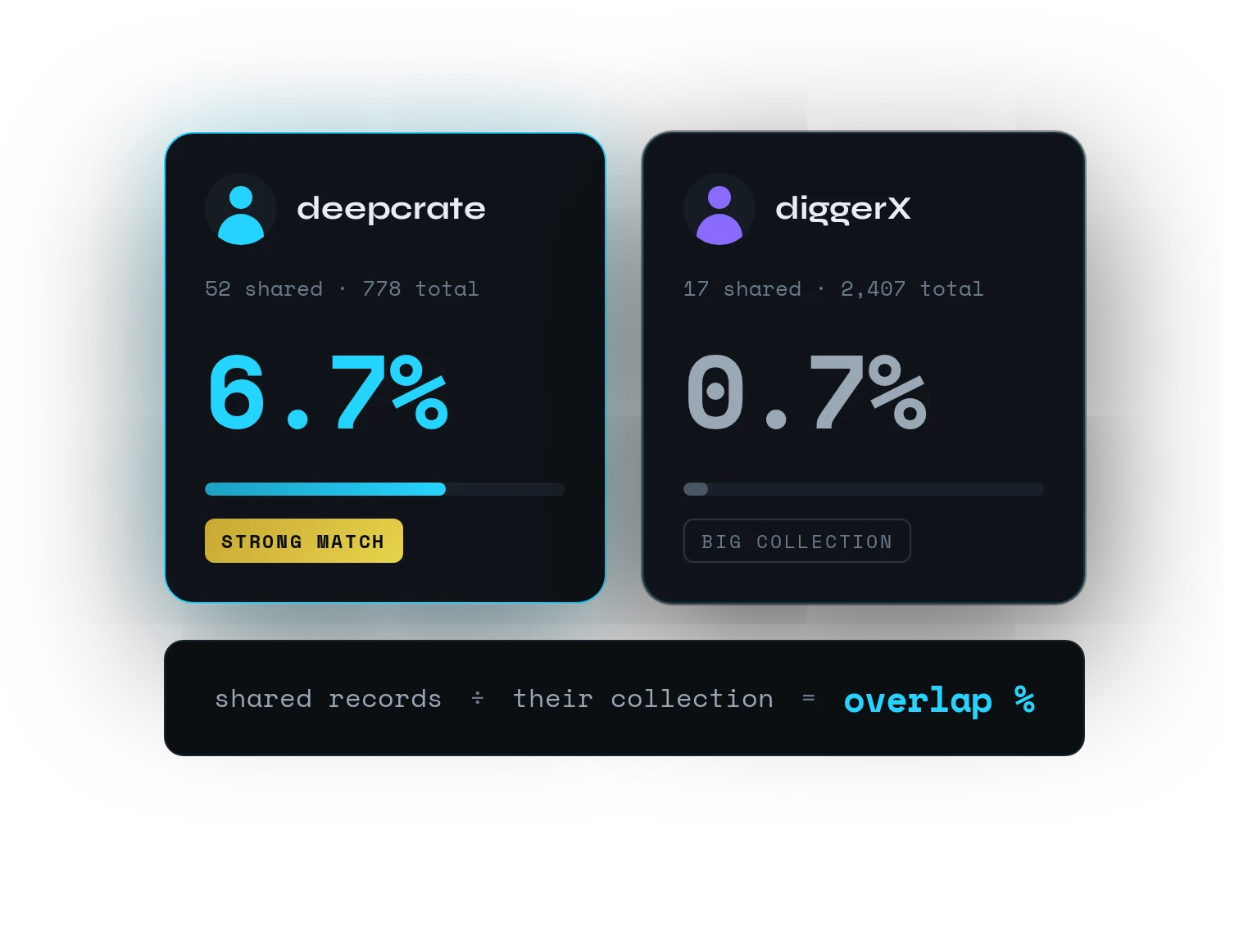
What you do with that list is up to you, the old-fashioned way: open their collections, listen, follow the people who feel right. TasteTwins only finds the people. The taste is theirs and yours.
FAQ
How do I stop Spotify from recommending the same songs?
You can make some difference by clearing listening history, excluding playlists from your taste profile and starting fresh radio stations. But the system will still lean toward the familiar. Adding people-led sources like fan collections, radio shows and labels does more than tweaking the algorithm.
What's the best music discovery method without algorithms?
Following people whose taste overlaps with yours. That can be a radio host, a record shop, a label or another fan. On Bandcamp, fan collections are especially useful because they show what people actually paid for.
Is TasteTwins an algorithm?
It doesn't recommend music. It counts the records you have in common with other Bandcamp fans and ranks those people by overlap. Every record you discover comes from a real person's collection.